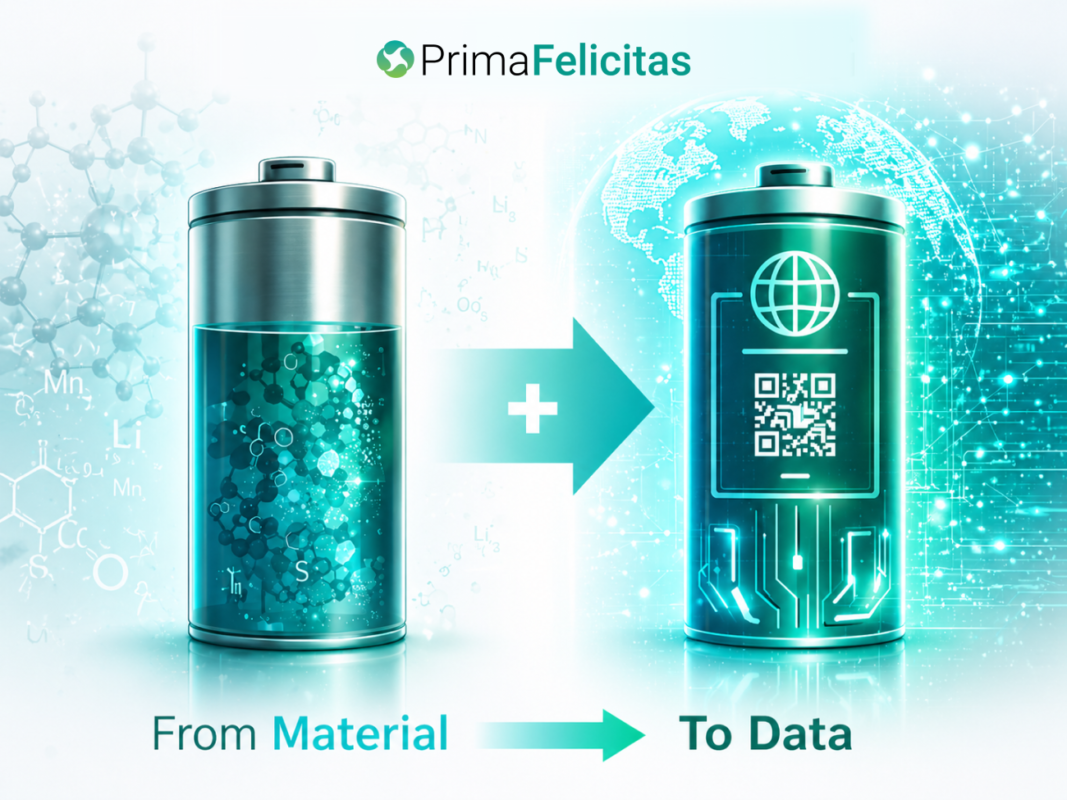
The battery industry is on a shift that is yet to be underestimated by many companies. Digital Battery Passport appears to be just another layer on the surface. Something related to compliance, documentation, and reporting. But that is a part of the change that can be seen. Something more structural is going on down here.
The EU Battery Regulation is driving the industry to lifecycle transparency across Europe. Each battery will have its own validated documentation, starting with the origin of the materials used in the battery up to the disposition of used batteries. What appears as a policy requirement is slowly being introduced as a new control layer throughout the whole ecosystem. And domination is where the true narrative sets in. It is no longer passive information because once battery data is portable and standardized. It begins to impact pricing, resale value, recycling performance, and even access to some markets. The same chemistry in two batteries may no longer bear the same value. The distinction will lie in their data.
This can already be observed in the early movements in industry. The Global Battery Alliance, as well as the EU Battery Pass Consortium, is not constructing theoretical models. They are stipulating the flow of battery data, access by whom, and its application within supply chains. At the close of this decade, a question will not be raised as to whether a Digital Battery Passport has been implemented by companies. The actual inquiry will be, did they really comprehend what it actually opened?
What and Is Actually Changing Before 2030

Battery Value is Silently Forced to a Data Migration out of Material.
The worth of a battery was long and simple to estimate. It was reduced to the chemistry, performance, and cost. The more the materials, the better the battery. That argument remains true, but is no longer the entirety. What is beginning to shift is the notion of understanding value in the lifecycle. Batteries can no longer be perceived as mere physical assets with the advent of the Digital Battery Passport. They are starting to bring with them an attested account of provenance, use, and state. The information is not simply stored to be in compliance. Slowly, it is being integrated into the process of making decisions throughout the ecosystem.
You can already see this change with a little analysis. A battery with good Battery Passport Data will not pass in the market in the same manner. It can be more easily resold, can be more easily repurposed, and can be more easily priced. The confidence of the buyers increases, the process of recycling gains clarity, and the second life uses set less risk. Conversely, batteries without significant data start to suffer friction even when their technical status remains good. This will continue to be widened. The trend is being driven in Europe through regulation as well as industry co-operation. The lifecycle transparency is becoming a requirement because of the EU Battery Regulation. Meanwhile, programs such as the Global Battery Alliance and Battery Pass Consortium are in the business of figuring out how such data will actually operate between various players.
The way that most firms are missing the mark is in their interpretation of this change. The trend of viewing data collection as a compliance activity still prevails. Information is not being used to build into systems but is stored. The requirement will be satisfied with A Battery Traceability System, which will report only, but it will not generate any actual benefit. The actual transformation is less obvious. Value is beginning to be affected by data. It is possible that by 2030, the same battery, based on its physical details, will have a different market valuation. The variance will be based on the level of trust they will have in their information and the ease with which the information can flow over the chain. This is the place that the market is moving.
Where the majority of the Companies Will falter.
The Divide Between possession and the Digital Battery Passport utilization.
The majority of the companies will not collapse due to neglect of the Digital Battery Passport. They will fail since they will be treating it like some task to be done, instead of establishing it as a part of their operations. An observable pattern in the industry is already evolving. The teams are establishing data capture layers, connecting records with QR codes, and are ready to undergo compliance checks. It appears to be progress, as seen at a distance. However, when you take a closer look, what is constructed is still shattered.
Whether there is data or not is not the question. Whether such information may relocate moving and carry its meaning beyond the system in which it has been generated is a question. Battery data continues to be disseminated in different functions in most of the organizations. One version is with manufacturing, another is with supply chain, and recycling or second life partners work with partial or delayed information. Even when all this has been technically documented, it has no tendency to form a trusted opinion. Most Battery Passport Data tends to become useless here.
The problem is even more obvious as batteries begin to move out of their early use stage.
By then, performance is no longer the sole basis of the decision. Buyers and partners begin to trust the story behind the battery. They also make inquiries on the sources of the materials, how they used the battery, and whether the information can be authenticated without straining. When the information in question is not consistently and reliably reachable, then the battery will be more difficult to assess. Such uncertainty does not prevent transactions but alters their nature, in which they occur. The time taken in negotiations becomes longer, check processes are more, and most of the times the pricing silently goes down and the risk is factored in.
This is the point where the difference enters into reality. With a Battery Traceability System, batteries with a dependable and connected network travel more easily along the resale and reuse lifecycle. There is less manual validation they are required, and they are more confident in the next owner. Simultaneously, batteries whose records have not yet been completed or those with disconnections start rubbing against each other. They can still be good technically, but the distrust in data creates reluctance all along the line. In the long-term, that reluctance becomes slowness in movement and less value.
This gap will not be petite as the market nears 2030. It will turn into a structural divide. There will be some companies where the flow of data will be in and out of sourcing, manufacturing, usage, and end of life. Inclined layers that are not wholly connected will still be operated by others. It will not be operational efficiency only that will separate the two. It will be reflected in the ease with which the batteries can be transported within the markets, the speed with which the batteries can undergo recycling, and the certainty with which they can be charged.
This is why the true problem is not embracing the Digital Battery Passport itself. It is also concerned with creating the architecture in such a way that it will be able to operate as a living system. In the absence of that, the passport as such exists, and yet it does not manifest leverage. In a market where data credibility is beginning to determine value, that gap will now be hard to overlook.
What Leaders Will Develop to Higher Before 2030 to Significantly Differentiate Circular Value.
Going Beyond Compliance to Revenue Thinking.
At this point in time, it is still a Digital Battery Passport that most organizations continue to approach with an understanding that it must be introduced since regulation dictates it. Data is gathered, stored, and organized in a manner that meets the reporting needs, but seldom relates to the real way the business gets money. The real opportunity is missed in that gap, as once battery data is made reliable and usable throughout the lifecycle, it will begin to have a direct impact on revenue-affecting decisions.
The assigning value is what starts to vary. Rather than depending upon chemistry alone or performance alone, the market also begins to consider how much information one has concerning a battery and how readily that information can be relied upon. Incompleteness of data or hard-to-verify data is now priced in the transaction. That uncertainty goes away when the data is clear and consistent, and the asset is moved more easily. Eventually, this difference begins to manifest itself in the speed of the batteries going through the system and in the confidence with which they are exchanged.
Battery Data to Resale Value.
Trust has never been an issue with secondary markets. Consumers are frequently forced to take incomplete records or external testing to comprehend what they are buying, slowing the transactions and constraining the trust in prices. With a growing number of batteries entering the second-use, this issue is becoming more apparent due to the increasing costs of uncertainty associated with scale.
This is where the appeal of Battery Passport Data takes a turn. Once the origin, usage pattern, and condition are already pre-formatted and available, repeated validation will not be required as often. Buyers are able to evaluate value with lower friction, and sellers are not forced to pay extra money due to uncertainty in their prices. This difference might not appear dramatic, but in the case of repeated transactions, the difference becomes significant. Batteries with dependable data will gain more momentum and be more valuable assets, whereas those without it will result in delays, extra inspections, and incremental price changes.
Making Recycling Economically Smarter
Recycling has always been seen as the last part of the lifecycle, with the majority of decisions being made when the battery is in the facility. The composition of material is studied, the process is chosen, and the recovery is scheduled depending on what would be discovered thereafter. It is effective, but it opens an opportunity of inefficiency due to delayed decision-making.
With an established Battery Traceability System, a good portion of all that uncertainty is minimized even before the battery starts to be recycled. Data on material composition, use history, and past conditions have already been established, which enables the recyclers to premeditate recovery strategies. They are able to anticipate what is that they are receiving rather than responding to it.
This directly impacts on economics. Through improved planning, recovery rates are better, and fewer steps to processing are required. This overtime translates to increased predictability and, in most cases, high returns of materials recycled. The concept of a circular economy begins to shift towards a structured revenue model, instead of an operational requirement.
The Technological Foundation which makes this possible.
All this cannot be done when the data is isolated and not easy to transport. Capturing is not the only technical challenge, but ensuring that the information remains consistent and usable moving through the systems and stakeholders that the battery will be used in. In most current systems, the data is stored in different systems that were not originally intended to connect with each other, which poses frustration whenever the information has to be shared or verified.
In order to get past that, companies are beginning to construct a common data layer in which information is packaged in a common format and is exposed via standard interfaces. Systems communicate with each other, eliminating the need to transfer files or re-enter data, enabling everyone involved to see the same version of the information. This minimizes duplication and aids in consistency.
To provide trust, important data like origin claims or events within a lifecycle can be pegged in systems that cannot be modified easily without identification. This is not aimed at shifting all to one technology, but to make sure that you can separately ascertain parts that constitute value. When such a layer is in place, it makes data a thing to turn on through transactions, not merely stored.
The reason why this will characterize market leaders in 2030.
This structure evolves, thereby making the distinction between early movers and late adopters less about technology and, instead, about the ease with which they work within the ecosystem. Businesses that construct interconnected systems at the earliest stage have less difficulty in transferring batteries through resale, second use, and recycling without friction. Their operations are predictable, and their asset value is more stable. Individuals who only consider the Digital Battery Passport a compliance measure will still satisfy the minimum threshold, but will still have to deal with minor inefficiencies at each of the transition points. These might not be critical individually, but with time, they influence pace, cost, and the trust of the partners.
Companies are not carrying out traceability as an independent tool. They are incorporating it into a larger data and system architecture so that it can be used in long-term operations. This is where firms such as PrimaFelicitas are collaborating with businesses to create systems that can not only manage compliance but also the dynamic needs of a circular battery economy.
What Is Already Moving And What Comes Next

The market has also begun to change, but Not Reeling.
And when you consider the way the battery ecosystem is changing as of today, the transition is not occurring in a single, broad jump. It is occurring in little and less noisy modifications in various chains. Manufacturers are starting to add more structured data to batters earlier in the production cycle, with internal Battery Traceability System layers that were previously absent a few years ago. Not just to comply, but to prevent friction later on, supply chain partners are demanding a more comprehensive approach to origin information, which could include only becoming more popular with regard to Battery Supply Chain Transparency. However, it is also fascinating to see the interests of recyclers receiving lifecycle data prior to material being received, as it minimizes uncertainty during processing.
All this is not being put in place as a significant change yet, but the trend is the same.
What is starting to become apparent is that those batteries that have clearer data began to shift in a different way. They weigh less in approvals, they are easier to move between spouses, and they generate fewer questions when making transactions. Meanwhile, batteries not as detailed as this are starting to entail additional checks, paperwork, and time. The difference is faint initially, but it begins gaining momentum with an increase in the volumes, particularly with Battery Passport Data likely to be fully developed and actionable across systems.
Here we can see the initial indicators of a greater change. The significance of good history is becoming increasingly difficult to overlook as an increasing number of batteries start to enter the second-life markets. Not only are energy storage firms, resellers and industrial users reviewing performance, they are working to comprehend risk. The ambiguity of the background of a battery compounds such risk and alters decision making. It increases to conservative pricing in a few situations. In others, it results in rejection altogether. Conversely, with a consistent and verifyable data, transactions will be streamlined and a faster decision will be made to facilitate the development of Second Life Batteries as a potential market segment.
The same trend is beginning to exhibit itself in recycling. Plants are slowly transitioning to handling each new arriving battery as a stranger. They have the capability to plan processes in advance, minimise inspection effort and get better recovery results when there is prior data. In the long term, this alters the organization of recycling processes, as they start basing on less reactive analysis and more on pre-existing information, which has a direct effect on Battery Recycling Revenue potential.
When you start analysing the future (2030) these initial adaptations start coming together into something a bit more established. There is a likely division of the market between traceable and non-traceable batteries. That division will not be official but it will be seen in the movements of assets as well as their valuation. Strong data batteries will move faster through resale, reuse, and recycling paths to contribute to the emergence of a more efficient Circular Battery Economy. Those batteries that do not have such a basis will not disappear; however, they will have to contend with more and more friction at every step.
Meanwhile, systems in their surroundings will also keep on changing. The data will not be kept as a fixed record for each battery. It will be integrated into larger systems where knowledge can be retrieved, validated, and applied in various applications. That is where the support of the Digital Battery Passport is not yet limited by compliance, but also to the functioning of the whole ecosystem.
The current situation will not be the last one. It is the initial development of a market in which data and physical resources cannot be separated. Those companies that see this early are already changing the way that they are putting their systems together. They are not holding back until a trigger point occurs. They are gearing towards a gradual transformation that is proving to be hard to overturn once thoroughly established.
It is the use of the data that will be the real advantage.
The transition to the Digital Battery Passport is already altering the values of batteries, their sales, and re-use. What seems to be a compliance layer today is slowly evolving to a decision layer that shapes the pricing, transaction speed, and access to circular markets. Firms that will consider Battery Passport Data as a working asset will work at a higher rate and will run more transparently. Those who handle it as a record will continue to experience friction. The difference between the two approaches will continue to increase as expectations onBattery Supply Chain Transparency continue to increase. That divide will characterize who creates a scalable role in the Circular Battery Economy, and who will have a hard time keeping pace.
Should you wish to get ahead of this change, it begins by developing systems that are capable of supporting that change. Get in touch with PrimaFelicitas to understand how your business can establish traceability systems that make data access to real circular value.
Post Views: 29


